
So, how much do you know about voter fraud vs. disenfranchisement? During our most recent elections a month ago, there was quite the uproar over the shutting down of early voting in states where it accommodated many elderly, handicapped, and non-White voters. There have been exposés written about the voter id laws disenfranchising a large number of college students, people who have recently moved, and often, non-White voters. Coalitions have been formed, accusations have been made… and now, Al Jazeera America clears just a little bit more up regarding the tactics used to check for voter fraud and whether or not they’re actually fair.

Race ya.
I want to both commend her and ask her to stfu, because the number of white voices being actually heard on this issue over black voices is astounding, but often people hear better from someone who they think has more experiences in common with them, and HypheNation is about hyphenating our nation and learning from one another to the best of our abilities, so here you all go…
Share this:

How to Talk to Someone about Privilege Who Doesn’t Know What That Is
View Original Post on EverydayFeminism.com (note: This is posted here in its entirety for your convenience, but you should definitely click the link and read it on everydayfeminism.com)
I once published a piece about white privilege, and my white friend’s dad lost it. He read it and immediately called his son at work and asked him, “What are you doing right now?”
My friend replied, “Working, why?” My friend worked as a carpet cleaner, backbreaking labor for sure.
“Well, Jamie says you’re privileged. Do you feel privileged right now as you bust your a*s to feed your family?”
“Are you kidding me?!? Screw him! I’ve never had anything handed to me!”
And so the story goes.
How many times have you tried to discuss privilege with someone who is well-meaning but who has no sense of their own privilege and gotten a similar result?
What is “identity privilege?”: Any unearned benefit or advantage one receives in society by nature of their identity. Examples of aspects of identity that can afford privilege: Race, Religion, Gender Identity, Sexual Orientation, Class/Wealth, Ability, or Citizenship Status
After a while, my friend brought up my blog post that pissed off him and his dad so much, and we discussed it.
It didn’t go well. He immediately got defensive, and the conversation ended in anger.
As I reflected upon our talk, I took stock of some of the tools I have been given over the years from my diversity work to make this conversation more accessible and less hostile.
I decided to try again, so I reached out to my friend. The second conversation was tense at times, as any conversation about privilege can be.
But this time it went really well, and I think it did because I worked hard to change the tone of the conversation.
Afterward, I couldn’t help but think, “I need to share these tools!!!” Thus, whether you’re trying to talk male privilege with your dad, white privilege with someone on the bus, or right-handed privilege with your golfing buddy, here are a few things to consider before jumping into the conversation:
1. Start By Appealing To the Ways In Which They Don’t Have Privilege
One of the fastest ways to disarm a person’s defensiveness about their own privilege is to take some time to listen to the ways in which they legitimately do not have privilege and validate those frustrations.
I once attended a workshop with Peggy McIntosh, the original author of “Unpacking the Invisible Knapsack.” The goal of the workshop was to give people tools for leading workshops of their own on privilege and oppression that get past the defensiveness.
One of her suggestions was to have people divide a paper in half. Have every person start on the left side of the paper and write down all of the ways in which they do not have identity privilege. They can include everything from being left handed and having to drag your hand through the ink to being a woman and having to deal with the gender wage gap. Then folks would write on the opposite side all of the ways in which their identity does afford them privilege that they did not earn.
From there, folks pair up and do a listening exercise where they listen intently to the other person talk about both sides of their list. Doing so allows people to air their frustrations at being denied privilege while also acknowledging that they do, indeed, have privilege.
From that place, it is a lot easier to help folks understand the power of privilege in creating a system of oppression and how eliminating that system is liberatory and transformative foreveryone.
Now, to do this, you don’t need to turn it into a workshop. Just try asking the other person to talk about the ways in which they don’t have identity privilege and validate those hurts and frustrations.
Simply listening can go a long way! Plus, it’s a starting point for helping them build empathy for those who do not have their same privileges.
2. Stress That Privilege Is Relative
Each person experiences their privilege and lack thereof within the context of their own community and the people they interact with at the time.
As such, privilege is relative, and we need to talk about it that way.
Does that mean that all privileges are equal? No. I’m right handed and in turn, don’t have to drag my palm through the ink when I write. That’s a privilege I have by the nature of my birth.
That is not to say, though, that my right-handed privilege bears the same weight or social responsibility as the privilege that my skin color, gender, wealth, or sexual orientation afford me.
The point is that our identities are complex and intersectional.
Some folks get defensive about discussing privilege because they fear such a conversation will not address the real and powerful ways in which they do not have privilege. So they deflect byonly talking about those things.
Just because we benefit from one form of privilege doesn’t mean that we benefit from all forms of privilege.
When we realize that, we can work together with people who share our privileges and those who don’t to build something better!
3. A System of Privilege and Oppression Hurts Us All
What we most need to stress in conversations about privilege is that this system doesn’t just hurt the people who cannot boast one form of identity privilege or another.
It hurts everyone. Until we understand that, we’re not getting anywhere because the only people of privilege who will ever act to end the system are the ones acting strictly from paternalistic guilt.
Take white privilege, for instance. White privilege is, essentially, a social construction whereby wealthy Europeans wanted to make sure that they could consolidate their wealth by pitting poor people from Europe against poor Africans and Indigenous people.
White folks were made to feel better about themselves and were given paltry privileges over people of color in order to divide the white proletariat.
All that meant, though, is that the white folks got to be the lords over people of color while the wealthy whites still had their boots on the necks of poor whites!
These privileges don’t help us as white people nearly as much as they hurt us!
Similarly, male privilege may benefit men tremendously in certain ways. But in others, it restricts us into a tiny box of masculinity. I don’t know about you, but I am sick of trying to fit into my gendered box, the “Act Like a Man” box.
I want my gender expression to be free and independent of those aspects of masculinity that hurt men and women – violence is acceptable for solving problems, boys don’t cry, men are the lords of their household, men must know everything even when they don’t, etc.
The privileges are marginal when we look at the system of justice that can be built on the other side of this struggle!
4. Privilege Does Not Have To Mean Guilt!
In The Construction of Masculinity, Michael Kaufman describes guilt like this: “Guilt is a profoundly conservative emotion and as such is not particularly useful for bringing about change. From a position of insecurity and guilt, people do not change or inspire others to change.”
So often, when introduced to the idea that they have privilege they did not earn, people respond in two ways that relate to guilt:
- Defensiveness: “I’m not going to feel guilty for what I inherited. If some people don’t have those same privileges, tough luck!”
- Paralyzing guilt: “This is just so unfair, but what am I supposed to do about it!? I never asked for this, and one little person can’t change a system that’s been around for hundreds of years!”
In both cases, we need to remind the person in question that feeling guilty doesn’t even need to enter the equation.
They’re right – they didn’t do anything to earn those privileges. So feeling guilty about them doesn’t make a lot of sense.
But a mentor of mine once said, “If we inherit injustice, we should never feel guilty. We are not responsible for that past. However, if we choose to do nothing about it going forward, then we have plenty to feel guilty about.”
Remind the person that they shouldn’t feel guilty for their privilege but encourage them to act to undermine the system by refusing to simply live in their unchecked privilege.
Which brings me to number 5…
5. Offer Concrete Ways That They Can Undermine the System of Privilege and Oppression In Their Own Life
When people are feeling paralyzed by or defensive about the revelation of privilege, it can sometimes help to offer them big and small ways that they can be subversive.
Encouraging action rather than stagnation can often bring people into the fold!
Throw out a few complex and simple ways for folks to “check” their privilege:
- If someone mentions an oppressive pattern that relates to privilege, i.e. “Men always dominate conversations and talk over women because they are taught that their voices are more valuable,” consider ways that you can choose not to participate in that pattern by, say, being aware of how often you’re speaking and stepping back to listen more often.
- Invest in accountable relationships across difference, not simple tokenizing relationships, and listen to those who do not share the same identity privilege about how this affects their life. Listening is the root of justice, after all.
- If some people are denied rights or privileges because of formal or state-sponsored oppression, refuse to participate in those oppressive systems. For example:
- If you’re straight, consider a commitment ceremony but don’t get married until all people can share in that legal right should they so choose.
- If you’re a white person with wealth and children, choose to invest in and send your children to a local, public, neighborhood school or at least a private school with a strong commitment to diversity and inclusion rather than a lily-white private place with connections to the Ivy League.
By encouraging action, you are not only helping the person in question a way to engage, but you are helping them understand the very nature of privilege and how it functions in a system of oppression.
6. Make It a Conversation of Actions, Not Character
Just as Jay Smooth says in “How to tell someone they sound racist,” the conversation about privilege should not be one about another person’s character.
The actual privileges we inherit because of our identity don’t define our character, but what does is whether we choose to act to change the system of oppression that affords us those privileges.
As such, the conversation should not be, “Hey, check your privilege, you privileged f*ck.”
Instead, it should be, “How can we work to check our privilege and undermine the system of oppression that hurts us all?”
When we focus on the actions we can take, the steps toward liberation we can take together, we make this conversation one that is not only accessible but far more powerful.
Do you have other suggestions for having these tough conversations about privilege and oppression? Leave them in the comments!
To learn more about different types of privilege, check out:
- White Privilege: Unpacking the Invisible Knapsack
- 30+ Examples of Male Privilege
- 30+ Examples of Cisgender Privilege
- 30+ Examples of Heterosexual Privilege in the US
- 30+ Examples of Middle-to-Upper Class Privilege
- 30+ Examples of Christian Privilege
- 20+ Examples of Thin Privilege
Jamie Utt is a Contributing Writer for Everyday Feminism and a diversity and inclusion consultant and sexual violence prevention educator based in Minneapolis, MN. He lives with his loving partner and his funtastic dog, Chloe. He blogs weekly atwww.ChangeFromWithin.org. Learn more about his work at www.JamieUtt.com. Follow him on Twitter @utt_jamie.
Continue reading “How to Talk to Someone about Privilege Who Doesn’t Know What That Is”
Share this:

What do the newly released witness statements tell us about the Michael Brown shooting?
View Original Post on PBS.org (note: this is not original material, and is quoted here in its entirety for your convenience, but you should read it on the original site)
In the grand jury case against Ferguson police officer Darren Wilson, the prosecution revealed that physical evidence weighed in Wilson’s favor and that he had not unlawfully shot 18-year-old Michael Brown to death.
Over the course of the investigation, federal agents interviewed dozens of witnesses—some compelled to come forward by subpoena—to piece together what happened on that August 9 afternoon. Shortly after the press conference announcing the jury’s decision, St. Louis County Prosecuting Attorney Robert McCulloch released the transcripts of interviews with witnesses and Wilson.
We read and analyzed more than 500 pages of witness testimony and compared each statement to those given by Wilson. Below is a chart comparing several key details of the officer’s report to the witness statements. Was Brown facing Wilson when he was shot, or was his back turned to him? Did Brown have his hands in the air, or were they reaching toward his waist?

The chart above doesn’t reveal who was right or wrong about what happened that day, but it is a clear indication that perceptions and memories can vary dramatically.
Here’s a breakdown of the data we found:
- More than 50 percent of the witness statements said that Michael Brown held his hands up when Darren Wilson shot him. (16 out of 29 such statements)
- Only five witness statements said that Brown reached toward his waist during the confrontation leading up to Wilson shooting him to death.
- More than half of the witness statements said that Brown was running away from Wilson when the police officer opened fire on the 18-year-old, while fewer than one-fifth of such statements indicated that was not the case.
- There was an even split among witness statements that said whether or not Wilson fired upon Brown when the 18-year-old had already collapsed onto the ground.
- Only six witness statements said that Brown was kneeling when Wilson opened fire on him. More than half of the witness statements did not mention whether or not Brown was kneeling.
It is rare for authorities to release grand jury documentation, but the St. Louis County Office of the Prosecuting Attorney permitted the release of most of the documents on Monday, as The New York Times recently reported.
McCulloch highlighted the variations in witness accounts during the grand jury press conference. “In subsequent interviews with law enforcement, or their testimony before the grand jury, many of the same witnesses acknowledged that they didn’t actually see the shooting,” McCulloch said. “Some were running for cover. Some were relating what they heard from others or as I said, what they assumed happened.” But many witnesses held steadfast to their interviews. “Several other witnesses maintained their original statement that Mr. Brown had his hands int he air and was not moving toward the officer when he was shot,” McCulloch said.
Reading the witness interviews provides a revealing window into the grand jury’s investigation. What could a witness see while positioned a “few blocks” away from the incident, as in the case of Witness 30?
Witness 43, a juvenile who was listening to music at the time of the shooting, looked out the window and saw the incident. “I saw a man with his hands in a police car trying to snatch it away, and then he got away. [Officer Wilson] pulled out the taser and tried to tase him but he missed. Then he pulled out the gun and tried to shoot him and he missed. Then he ran down the street and then he shot him once and I stopped looking, but I heard like four or five more shots. Then when I looked back out there he was laying on the ground.”
With reporting by Ashira Morris, Adelyn Baxter, Ruth Tam and Travis Daub
Ed. Note: The table has been updated to more accurately reflect the witness testimony of Officer Darren Wilson, and language about witness testimony was clarified to say witness statements.
Share this:

Ferguson, White Privilege, and Human Lives Mattering
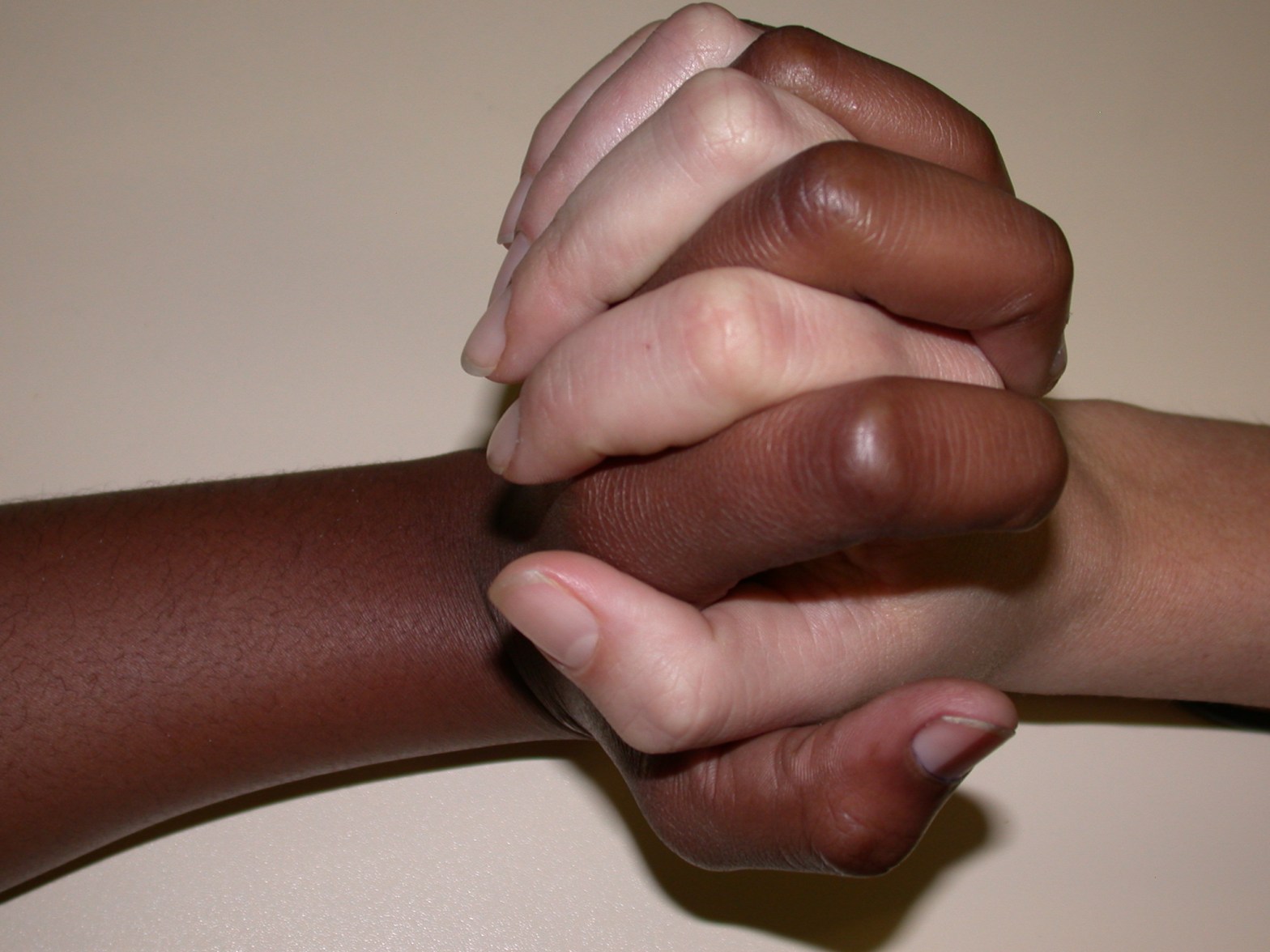
Since the grand jury verdict in the case against Michael Brown’s shooter has been made public, a lot has gone down. People’s Facebook friendships have been reevaluated. People have asked what they can do to feel useful and make change, and when given concrete tasks, have opted to go out and protest and march for the evening. Looting and rioting on a scale far smaller than Massachusetts’ reaction to the Red Sox beating the Cardinals in ’04 has occurred.
But what else? What are we doing? Are we sitting and complaining and calling out that Black Lives Matter? They do. We can’t prove that any more than we already have, and we shouldn’t have to. Black people are in all facets of society, and we’re not in control of the dominant narrative of our story. That’s the issue… not what we do, but how we’re perceived. White guilt, white reluctance to accept the label of “privilege” because they don’t understand intersectionality, and fear of accepting responsibility for something that they didn’t actively participate in, all holds back these conversations. There are too many conversational road blocks to real change. There’s too much invested, by people on all sides, in the status quo, because comfort and contentment are difficult to uproot, even for excellence.
HypheNation’s purpose is to foster socio-racial conversation and identity development in America. Without a safe, non-judgmental place for conversation to happen, it won’t–other than with those who are already part of the chorus. Preaching to the choir does nobody any good. Talking to people who want to be allies but don’t know how, and can’t dissect their white privilege without being defensive about how of course they don’t have privilege, they grew up poor and fat and female and in the backwoods (or whatever other reasons they don’t understand about intersectionality, as above), falls on deaf ears unless we help those people figure out their socio-racial identity (which they don’t even realize that they have, because they think it’s just “normal” plus their personality) in a safe way, just like we want to be safe. In regards to willful ignorance exerted on someone’s posting of an article on why Jewish-Americans should care about Ferguson, a commenter mentioned that “Ignorance is bliss…” My response? “It is! It’s such an expensive luxury, I wish I could afford it.”
HypheNation. A safe place to learn about yourself and the people around you. A place where you’ll get called out on needing to check your privilege, be it academic, White, citizenship, class, or what-have-you, but it’ll be done in a loving way where we help you explore what that means, erase the guilt, and use it productively. A place where the stupid things you say won’t be left alone by any means, but will be discussed rather than flamed. Come. Talk. Vent. Learn.

 hypheNation
